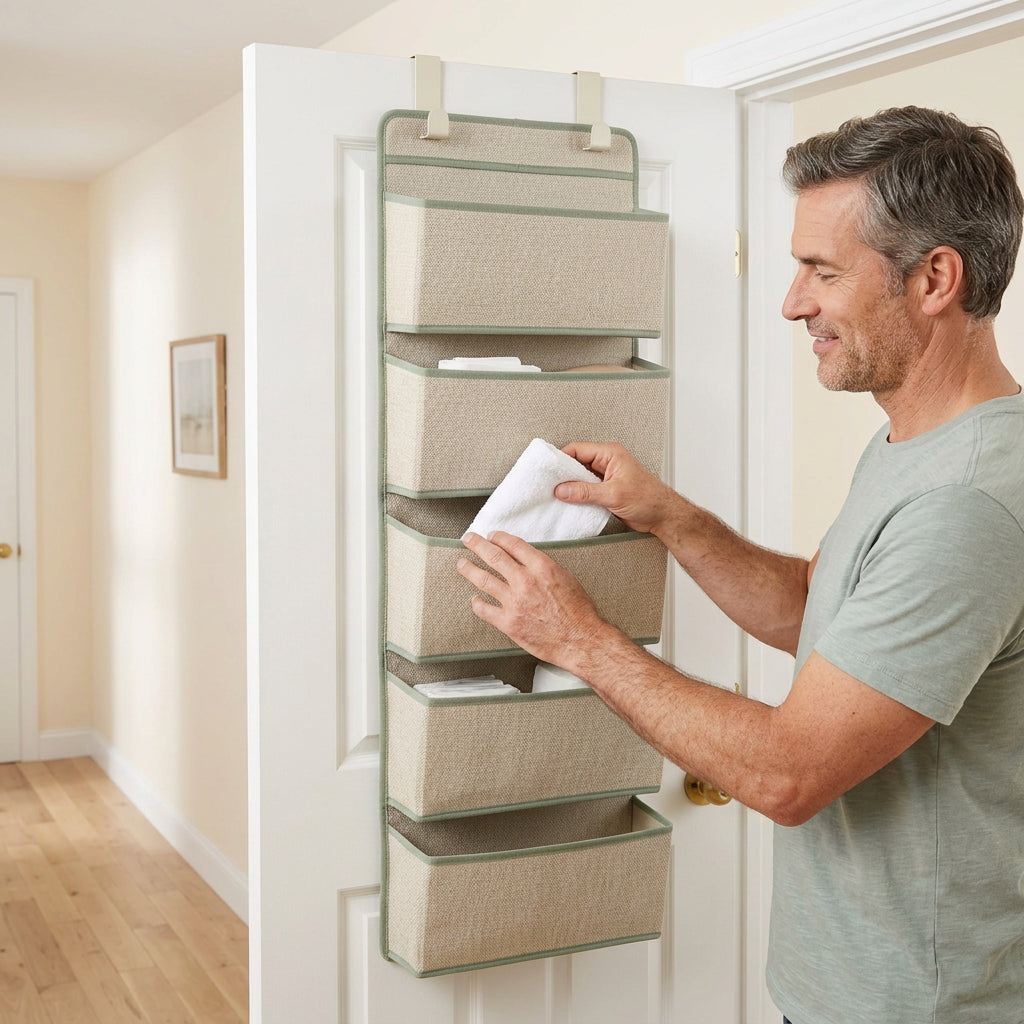
Over-Door Storage Organizer
Over-Door Storage Organizer
📢Try it now and if it doesn't work, we guarantee a full refund!
✅ Made in the UK
✅ 90-day money-back guarantee
✅ Natural ingredients for fast, long-lasting results
✅ Long-standing service to the London Early Years Foundation
⚡ Stock is limited and will sell out soon!
Couldn't load pickup availability
🚪 Find a home for the small essentials
Small essentials often need a home even when shelves and drawers already feel full.
Scarves, accessories, and small household essentials can be hard to place when drawers already feel full. An over-door storage organizer makes a vertical area part of the arrangement. Begin with the door itself: it must still operate properly, close without force, and remain clear for its normal purpose. Useful storage should make a room easier to live in, not turn the doorway into another obstacle.

🧣 Use vertical space with intention
Why this approach. Group small items by how you use them so returning something is as straightforward as finding it. Keep frequently reached-for pieces at a comfortable height and avoid filling pockets until their contents become difficult to see or remove. A focused selection makes a more useful everyday arrangement than using every pocket for unrelated odds and ends. The organizer is a place for suitable essentials, not a reason to overload a door.
Check compatibility. Measure door thickness, top clearance, hanging length, and the space needed for the door to close. Consider the surrounding space as well as the immediate contact area: you need room for your hands, for the task itself, and for anything that must move or be removed afterward. Keep the supplied instructions with your household care information so you can refer back to them. If the setup changes, check it again rather than assuming the same arrangement will still be appropriate.
Prepare the area. Decide which small essentials genuinely benefit from being stored by the door. Keep related items together and choose positions that allow you to see and remove them without pulling at the fabric. Check both sides of the door's travel, including nearby furniture and the wall behind it. An organizer that hangs neatly while the door is closed still needs to remain clear when the room is being used normally.

🗂️ Arrange pockets around your day
Measure the door thickness, clearance above it, and the hanging area below. Follow the fitting instructions for the supplied hanging system, then test the empty door slowly. Stop if hooks catch, the door cannot close normally, or the organizer interferes with hardware. Load suitable items gradually within the product's stated limits. Recheck door movement after adding contents and make sure the surrounding route remains unobstructed.

🌿 Keep the doorway clear
Make it part of the routine. Test the arrangement during an ordinary day of opening and closing the door. If items swing, press against fittings, or become difficult to retrieve, reduce and rearrange the contents. Avoid adding something simply because a pocket appears empty. Recheck the hanging system after cleaning or refitting, and keep the door's original function the priority. Storage works best here when it remains a quiet part of the room rather than demanding extra handling.
Care and storage. Empty pockets before cleaning or refitting the organizer. Use a method compatible with its actual fabric and hanging parts, drying as directed before reloading. Check hooks, seams, and attachment areas regularly. Avoid sharp objects that could damage pockets and leaking products that could mark the door or contents. Keep exits and required access clear at all times.

🍃 A thoughtful doorway reset
Before the next use, take a moment to look over the parts you will handle and the area where they will be used. Stop if something is damaged, loose, or no longer suitable for the task. Store the product where it can be retrieved without disturbing fragile items, and keep any loose components together according to the supplied guidance. A thoughtful finish today makes the next household task easier to begin.

💬 Over-door organizer answers
Will it fit every door?
Door thickness, top clearance, hardware, and opening direction all matter. Compare the actual fitting requirements before hanging it.
Can I use it on an exit door?
Never obstruct an exit or interfere with the door's operation or required hardware. Choose a location that remains safe and suitable.
Can I put heavy bottles in the pockets?
Follow the stated load limits and pocket guidance. Do not assume every pocket can support the same kind of item.
What if the door rubs after installation?
Unload and remove the organizer as needed. Do not force the door or modify required hardware to accommodate it.

Over-Door Storage Organizer